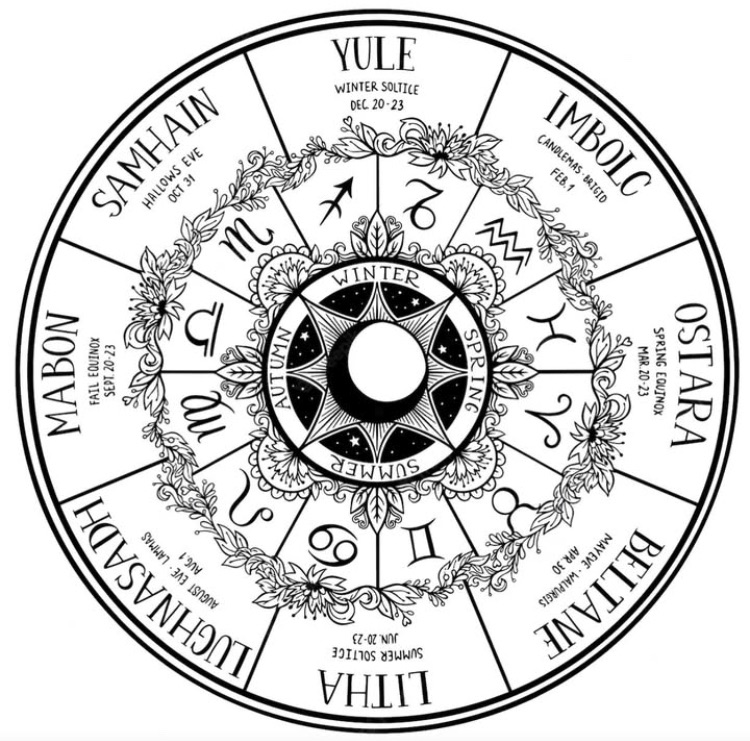
The Wheel of the Year is a cyclical, seasonal calendar for pagans and witches, representing the natural cycles of life, death, and rebirth. It’s a way to celebrate the eight Sabbats, which are eight religious festivals that mark the major points in the yearly cycle of nature. These festivals are often connected to ancient Celtic traditions and agricultural practices.
Here’s a more detailed look at what the Wheel of the Year means to a coven:
- Cycles of Nature: The Wheel of the Year is a reminder of the ever-changing nature of the world, from the rebirth of spring to the quiet slumber of winter.
- Sabbats: The eight Sabbats are celebrated throughout the year, each marking a significant point in the Wheel of the Year. These festivals include:
- Yule (Winter Solstice): Celebrates the rebirth of the sun.
- Imbolc: A time of renewal and purification.
- Ostara (Spring Equinox): Celebrates the blossoming of nature.
- Beltane: A time of abundance and fertility.
- Litha (Summer Solstice): A time of intense energy and light.
- Lughnasadh: A time of harvest and abundance.
- Mabon (Autumn Equinox): A time of balance and gratitude.
- Samhain: A time of honoring the dead and looking towards the New Year.
- Rituals and Celebrations: Covens often participate in rituals, celebrations, and feasts to mark each of the Sabbats.
- Worship of the Goddess and God: The Wheel of the Year is a way for covens to connect with and worship the Goddess and Horned God, who are often associated with the changing seasons.
- Learning and Training: In addition to the Sabbats, covens also have Esbats, which are lunar-based celebrations, and these can be times for learning and training.
 The Grove Coven