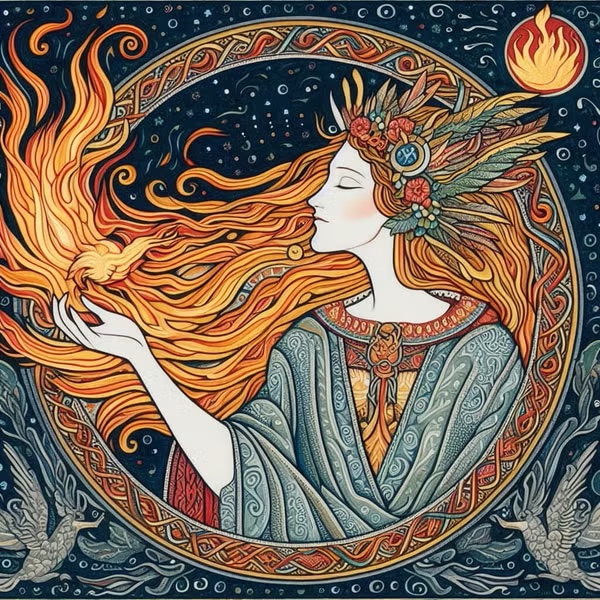
Imbolc is a significant festival that marks the midpoint between the winter solstice and spring equinox, celebrating the return of light and the beginning of spring. It’s a time for honoring the goddess Brigid, who is associated with fertility, healing, and the arts. Imbolc also marks the start of lambing season and the reawakening of nature.
Here’s a more detailed look at the importance of Imbolc:
- Midpoint of Winter and Spring: Imbolc is celebrated on February 1st and marks the halfway point between the winter solstice (Yule) and the spring equinox (Ostara).
- Honoring Brigid: The festival is deeply rooted in the Celtic tradition of honoring Brigid, a goddess associated with fertility, healing, poetry, and smithcraft.
- Awakening of Nature: Imbolc signifies the return of light and the first signs of spring, as the days begin to lengthen and nature stirs from its winter dormancy.
- Time of Renewal: Imbolc is a time for purification, cleansing, and setting intentions for the coming year.
- Preparation for Planting: For agrarian societies, Imbolc marked the beginning of preparation for the planting season and the care of livestock.
- Fertility and Rebirth: Imbolc is a time to celebrate the earth’s regenerative power, from winter dormancy to the vitality of spring.
- Celebrated by Wiccans and Pagans: Imbolc is a significant festival for Wiccans and other practitioners of neo-pagan or pagan-influenced religion.
 The Grove Coven