
In Wicca and other Pagan traditions, Esbats are crucial monthly gatherings for Covens, distinct from the eight annual Sabbats, which mark the solar year.
Here’s why observing Esbats is important to our Coven:
- Honoring the Moon and the Goddess: Esbats are primarily focused on the moon and its phases, particularly the Full Moon, which is associated with the Goddess and feminine energies. These gatherings provide a sacred space to connect with lunar energy and commune with the divine.
- Magical Workings: Covens utilize the potent lunar energy of the Esbats, particularly during the Full Moon, for magical workings. This is a time to raise and focus energy for specific goals or spells.
- Developing Psychic Abilities and Spiritual Growth: Esbats are seen as opportunities to cultivate intuition, develop psychic powers, and deepen spiritual connections. Practices like “Drawing Down the Moon,” where the essence of the Moon Mother is invoked into a coven member, are performed during Full Moon Esbats to enhance psychic and spiritual development.
- Community and Connection: Covens come together during Esbats for rituals, social gatherings, and to strengthen their bonds as a community. This fosters a sense of belonging and support among members.
- Healing and Personal Transformation: Esbats can be used for healing work and to reflect on personal growth and changes during the past moon cycle. New Moon rituals, in particular, may focus on banishing unwanted influences and ending phases in life.
- Marking Time and Aligning with Natural Cycles: The monthly observance of Esbats helps covens stay connected to the natural rhythms of the moon and the lunar year. Just as Sabbats mark the solar year, Esbats mark the lunar cycle, creating a “second Wheel of the Year”.
In essence, Esbats are monthly occasions for covens to engage in magical practice, connect with the divine, foster community, and promote personal and spiritual growth, all in harmony with the cycles of the moon.
JANUARY ESBATS

New Moon Prompt

Crescent Moon

The Wolf Moon
In Wicca and other Pagan traditions, Esbat rituals held during the full moon and new moon, while both honoring the lunar cycles, tend to focus on different types of magical workings and intentions.
Full Moon Esbats:
- Focus: Fullness, culmination, celebration, gratitude, and releasing what no longer serves.
- Magical Workings, :
- Drawing Down the Moon: A central ritual in many traditions where the High Priestess invokes the Goddess (often symbolized by the Moon) into herself, acting as a channel for divine energy.
- Spellwork for Increase/Gain: Spells related to wholeness, children and mothers, families, psychic enhancement, and some love spells.
- Release and Letting Go: A powerful time for rituals to release negativity, old habits, or situations that are no longer serving one’s highest good.
- Cleansing & Charging: Cleansing and charging crystals, tools, or oneself under the powerful full moonlight.
- Emotions: May be heightened, requiring a focus on grounding and self-compassion.
- Community: Often a time for gathering and celebrating with the coven.
FEBRUARY ESBATS
New Moon Prompt
FEBRUARY 27
Crescent Moon
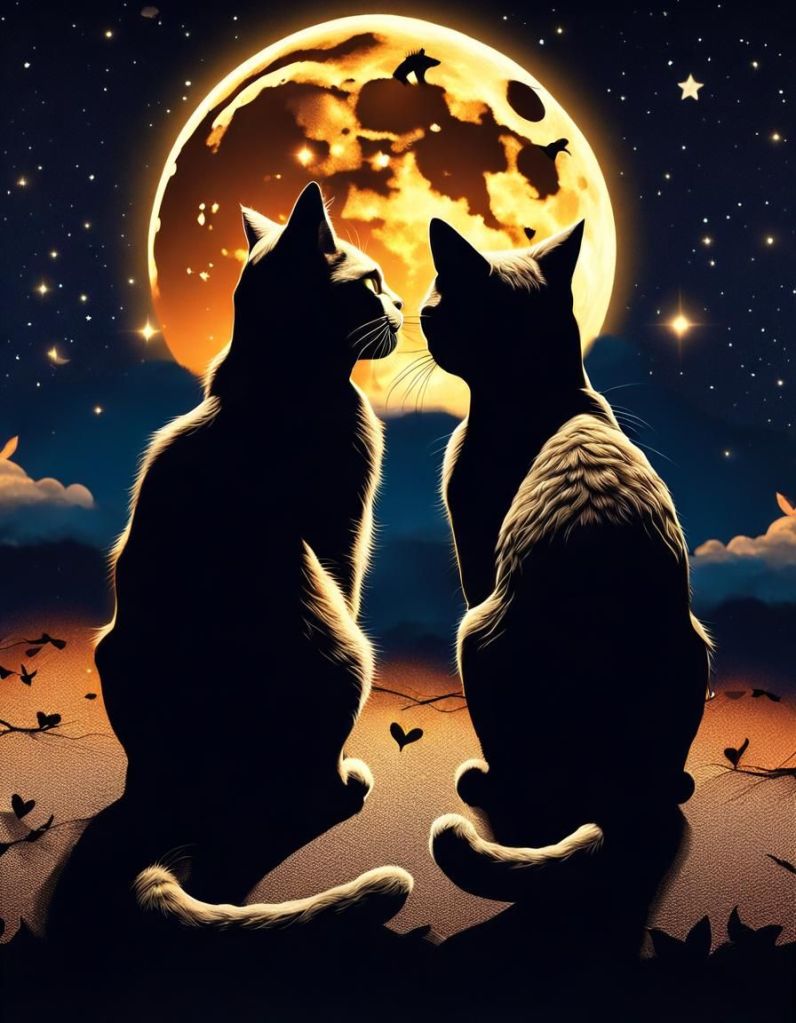
The Lovers Moon
WEDNESDAY FEBRUARY 12
New Moon Esbats:
- Focus: New beginnings, introspection, planting seeds of intention, and manifestation.
- Magical Workings:
- Setting Intentions/Goals: An ideal time to reflect on desires for the coming month and set intentions for what one wants to manifest.
- Manifestation Magic: Utilizing the energy of the new moon to attract or bring about desired outcomes.
- Banishment/Ending: While focused on new beginnings, the new moon is also a time to release old unwanted energies, cleanse spaces, and end phases in life.
In essence, Full Moon Esbats emphasize the power and culmination of the lunar cycle, focusing on release, gratitude, and powerful magic. New Moon Esbats, on the other hand, embrace the darkness and potential of the new cycle, serving as a time for planting seeds of intention, banishing the old, and setting the stage for growth and manifestation.
MARCH ESBATS
New Moon Prompt
MARCH 29
Crescent Moon
The Seed Moon
FRIDAY MARCH 14
In Wicca, “Drawing Down the Moon” is a powerful and significant ritual, often performed during Esbats, particularly at the Full Moon.
It involves invoking the Goddess, symbolized by the Moon, into the High Priestess (or the practitioner in a solitary setting), allowing her to become a vessel for the divine energy. While traditions vary between covens, here are some common practices:
- Invocation of the Goddess: The core of the ritual is a request for the Goddess to enter and speak through the High Priestess. This can involve chanting, reciting traditional invocations, and inducing a trance state.
- The Charge of the Goddess: Many traditions use a text called the Charge of the Goddess, according to Wikipedia, based on the writings of Gerald Gardner and Aleister Crowley, and later adapted by Doreen Valiente. This text is recited to call upon the Goddess and guide the ritual.
- Symbolic Gestures: Practitioners may assume specific poses, such as holding their arms high with palms up in a “Goddess Pose” to signify opening themselves to the divine energy. Other gestures, like creating a triangle with the thumbs and index fingers to gaze at the moon, may also be incorporated.
- Channeling and Wisdom: During the trance state, the High Priestess may channel messages, wisdom, or healing from the Goddess, sharing them with the coven members.
- Group Participation: In coven rituals, the High Priest may assist the High Priestess in the invocation process. The coven members can also actively participate through chants, songs, and meditation to help create a powerful atmosphere for the ritual.
- Solitary Practice: Drawing Down the Moon can also be performed in a solitary setting, where the individual invokes the Goddess and connects with the lunar energy personally.
Note: Drawing Down the Moon is an intense and personal experience that requires dedication and understanding of the Craft. It’s often reserved for experienced practitioners within a Coven, though adaptations exist for solitary Wiccans. The goal is to establish a deep connection with the Goddess and experience the divine feminine within oneself.
APRIL ESBATS
New Moon Prompt
APRIL 27
Crescent Moon
APRIL 30

The Pink Moon
SATURDAY APRIL 12
Observing Esbats as a Coven in Wicca and other Pagan traditions offers a multitude of psychological, social, and spiritual benefits to its members:
Psychological benefits:
- Sense of Control & Empowerment: Rituals can provide a sense of control and empowerment, helping individuals feel more connected to their lives and their destinies.
- Reduced Stress and Anxiety: Engaging in familiar routines, like Esbat rituals, can have a calming effect, creating mental space to release negative emotions and reduce stress. This can be particularly beneficial in managing anxiety and navigating life’s challenges.
- Self-Reflection and Introspection: Esbats provide a space for quiet reflection and introspection, encouraging members to examine their emotions, thoughts, and progress since the last moon cycle. This can lead to greater self-awareness, emotional clarity, and personal growth.
- Emotional Regulation and Coping Mechanisms: Rituals can be grounding and soothing, offering comfort during stressful or crisis moments. Connecting with the lunar cycles, for instance, can help individuals understand their own emotional rhythms and develop healthier ways of managing emotions.
- Boosted Self-Esteem and Confidence: Wicca’s emphasis on individuality, open-mindedness, and acceptance, according to PantherNOW, can foster a sense of self-worth and confidence within practitioners. Rituals may also involve manifesting personal goals, further strengthening belief in one’s abilities.
MAY ESBATS
New Moon Prompt
MAY 26
Crescent Moon
MAY 29

The Milk Moon
MONDAY MAY 12
Social Benefits:
- Community & Sense of Belonging: Shared rituals and practices create a strong sense of community and belonging within a coven. This reduces feelings of isolation, especially for those whose spiritual beliefs may differ from the mainstream.
- Social Support & Shared Experiences: Covens provide a network of individuals who share similar values and a common spiritual path, offering mutual support and understanding. This shared experience can be particularly valuable during times of struggle.
- Learning and Growth: Coven members can learn from one another, sharing experiences, insights, and knowledge of the craft. This fosters personal and spiritual growth within a supportive environment.
- Reinforced Social Bonds: Participating in shared rituals, feasts, and discussions strengthens the bonds between coven members, building trust and camaraderie.
JUNE ESBATS
New Moon Prompt
JUNE 25
Crescent Moon
JUNE 28
The Hot Moon
WEDNESDAY JUNE 11
Spiritual Benefits:
- Connection to the Divine: Esbats, particularly those at the full moon, are dedicated to honoring the Moon Goddess and connecting with the divine feminine. This fosters a sense of spiritual connection and communion with a higher power or the universe.
- Alignment with Nature’s Cycles: Esbats reinforce the connection to the cycles of the moon and nature, according to Wikipedia, helping practitioners feel more in tune with the natural world and its rhythms. This can be grounding and provide a sense of harmony.
- Magical Workings & Manifestation: Esbats are often dedicated to specific magical workings, with the Full Moon being a time for increasing or gaining positive results, and the New Moon for setting intentions and manifesting new beginnings.
- Psychic Development and Inner Wisdom: Practices like Drawing Down the Moon can be experienced, allowing individuals to channel divine energy and potentially unlock psychic abilities or deepen their intuition.
- Spiritual Growth & Purpose: The regular observance of Esbats fosters spiritual growth, offering a path for personal transformation and a deeper understanding of one’s purpose within the larger cosmos.
In essence, observing Esbats provides a regular opportunity for Wiccans and Pagans to connect with the divine, align with the natural world, engage in magical practices, and build a strong, supportive community, leading to enhanced psychological, social, and spiritual well-being.
JULY ESBATS
New Moon Prompt
JULY 24
Crescent Moon
JULY 27

The Buck Moon
THURSDAY JULY 10
There are several misconceptions surrounding the Great Rite in Wicca, particularly for those unfamiliar with the religion or its practices.
Here are some common misconceptions and clarifications:
1. The Great Rite always involves literal sex:
- Misconception: Many assume that the Great Rite always means actual sexual intercourse.
- Clarification: The Great Rite has both symbolic and literal forms. The symbolic version, which is much more common, involves placing an athame (representing the masculine) into a chalice (representing the feminine), symbolizing the sacred union of the God and Goddess. The literal version, involving sexual intercourse, is a private and consensual act between the High Priest and High Priestess or other designated participants, typically performed after other coven members have left the ritual space.
2. The Great Rite is mandatory for all Wiccans:
- Misconception: Some believe that participation in the Great Rite is essential for all Wiccans, perhaps even required for initiation or spiritual advancement.
- Clarification: The Great Rite is not for all practitioners, and not all Wiccans participate in the Great Rite. It’s a personal choice, and one can practice Wicca throughout their life without ever participating in the Great Rite. Some traditions may reserve it for certain levels of initiation, notes Llewellyn.
3. The Great Rite is inherently exploitative or non-consensual:
- Misconception: Due to the focus on sexuality, some may perceive the Great Rite as potentially exploitative or lacking in consent, particularly for women.
- Clarification: Consent is paramount in Wicca, particularly regarding the Great Rite. It should only be performed with the explicit and enthusiastic consent of all participants. Any form of coercion, manipulation, or discomfort is considered unacceptable and goes against the ethical principles of Wicca. According to Llewellyn, mutual trust and love are cornerstones in Wicca/Witchcraft.
4. The Great Rite is solely about procreation:
- Misconception: Some may mistakenly believe the Great Rite is only about physical reproduction.
- Clarification: The Great Rite symbolizes the sacred union of the Goddess and God, embodying the principles of creation, fertility, and the sacredness of the masculine and feminine energies, both in a physical and spiritual sense. It represents the balance and harmony of these energies within the individual and the universe. The energy generated during the Great Rite can be used for various purposes beyond physical procreation, such as strengthening the coven, for specific magical workings, or fostering creativity and bringing projects to fruition.
5. The Great Rite is a form of devil worship or “dark magic”:
- Misconception: Some who misunderstand Wicca may associate the Great Rite with devil worship or evil practices.
- Clarification: Wicca does not involve the worship of Satan or the Devil. The Great Rite is a celebration of the divine masculine and feminine energies within a sacred context, honoring the cycles of nature and life itself.
In summary, the Great Rite is a multifaceted and deeply symbolic ritual within Wicca. Understanding its symbolic and literal forms, the importance of consent, its focus on spiritual growth and balance, and its connection to the divine feminine and masculine energies is crucial to overcoming common misconceptions.
AUGUST ESBATS
New Moon Prompt
AUGUST 23
Crescent Moon
AUGUST 26
The Green Corn Moon
SATURDAY AUGUST 9
In Wicca, the Great Rite is a powerful ritual that symbolizes the union of the Goddess and God, embodying the principles of fertility, creation, and the sacredness of the masculine and feminine energies.
It’s a central practice in some traditions, though it’s not a universal practice within Wicca.
Here’s how the Great Rite is understood and practiced, especially concerning a Full Moon Esbat:
1. Symbolism and Purpose:
- Sacred Marriage (Hieros Gamos): The Great Rite represents the sacred marriage of the Goddess and God, reflecting the dual aspects of the divine and their union as the source of all creation.
- Fertility and Creation: It’s considered a fertility rite, acknowledging the vital role of the union of male and female energies in the propagation of life, both human and natural.
- Energy Generation: The ritual is believed to draw energy from the powerful connection between the masculine and feminine, generating spiritual power that can be used for various purposes, including strengthening the coven and its members, or for specific magical workings.
- Balancing Duality: It honors the polarity that exists in the universe and within each individual, promoting balance between the masculine and feminine energies within oneself.
2. Forms of Practice:
- Symbolic Version: This is the most common form, where the High Priestess plunges an athame (ritual knife, representing the masculine) into a chalice filled with wine (representing the feminine), symbolizing the sacred union.
- Literal Version: In some traditions, the Great Rite is enacted through actual sexual intercourse between the High Priest and High Priestess or other chosen participants, according to Ceisiwr Serith. This is typically done in private, after other coven members have left the sacred space. It’s important to note that this is a highly personal decision and requires mutual trust, respect, and consent.
3. Full Moon Connection:
- Esbats: Full Moon Esbats are monthly rituals in Wicca that celebrate the culmination of the moon’s energy.
- Heightened Energy: The full moon is believed to be a time when the moon’s energy is at its peak, making it an ideal time for powerful rituals like the Great Rite.
- Drawing Down the Moon: The Great Rite can complement the practice of “Drawing Down the Moon,” where the Goddess is invoked into the High Priestess, further connecting with the divine feminine energy during the full moon.
4. Consent and Ethics:
- Absolute Consent: The Great Rite, whether symbolic or literal, should only be performed with the explicit and enthusiastic consent of all participants. Coercion, manipulation, or discomfort are never acceptable.
- Respect and Sacredness: It’s seen as a sacred act that requires deep respect for the participants and the divine principles it represents.
In conclusion, the Great Rite, when performed during a full moon Esbat, is a ritual that harnesses the powerful energy of the moon and the sacred union of the Goddess and God to promote fertility, creation, balance, and spiritual growth within the coven and its members. It can take both symbolic and literal forms, always requiring the utmost respect and consent from all involved.
SEPTEMBER ESBATS
New Moon Prompt
SEPTEMBER 21
Crescent Moon
SEPTEMBER 24

The Harvest Moon
SUNDAY SEPTEMBER 7
Ritualizing the Crescent Moon in a Coven:
A Coven can celebrate, honor, and ritualize the crescent moon, particularly the waxing crescent, to tap into its energy of new beginnings, growth, and intention setting. This phase is considered a powerful time for manifesting goals and attracting positive influences.
Here are some ways a coven might choose to ritualize this moon phase
1. Setting and Strengthening Intentions:
- During the waxing crescent, focus on establishing and nurturing new goals and intentions.
- Members can visualize their goals manifesting and take concrete actions towards achieving them.
- One can write down their intentions on paper, speak them aloud during the ritual, and release them to the universe, says Aura Health.
- Another method is to write a list of goals and desires, read it aloud under the crescent moon (or an image of it), leave it exposed to the moon’s energy, and then place it on the coven altar.
2. Magical Workings for Growth and Prosperity:
- The waxing crescent moon’s energy supports spells related to abundance, attraction, and success.
- Coven members can work together on prosperity spells, like creating a money bowl by combining coins, herbs associated with wealth (e.g., basil, cinnamon), and green crystals.
- Candle spells can be particularly effective during this phase for attracting desired outcomes and increasing benefits.
- Spells focused on personal growth, overcoming challenges, and building self-confidence can also be performed during this period.
3. Meditation and Visualization:
- Meditation under the waxing crescent moon can involve visualizing goals already achieved, creating an internal alignment with the external goal.
- Coven members can reflect on their dreams, desires, and progress since the last new moon, gaining clarity and making adjustments as needed.
- Meditation can help release negativity and emotional baggage, allowing for personal growth and transformation.
4. Connecting with the Goddess:
- In Wicca, the waxing crescent moon is strongly associated with the Goddess, symbolizing new beginnings, progress, and innovation.
- It can be seen as representing the Maiden phase of the Triple Goddess, embodying the energy of unlimited potential and new possibilities.
- Rituals may involve invoking the Goddess or simply honoring her presence during this phase, notes Symbolikon.
5. Coven Practices:
- Coven meetings during the waxing crescent may include sharing personal goals and intentions, offering support and encouragement to one another.
- Collective rituals can be performed to work towards shared goals, such as bringing about rain during a drought.
- Activities like crafting wands or pendulums, dressing candles, or preparing ritual tools during this phase can imbue them with positive energy.
By embracing the energy of the waxing crescent moon, a coven can strengthen their intentions, engage in powerful magical workings, foster personal and collective growth, and deepen their connection to the divine feminine.
OCTOBER ESBATS
New Moon Prompt
OCTOBER 21
Crescent Moon
OCTOBER 24

The Hunters Moon
MONDAY OCTOBER 6
The moon has captivated humanity across cultures and throughout history, inspiring a rich tapestry of beliefs and deities. In Wicca, the Moon Goddess is central, often revered as a Triple Goddess representing the Maiden, Mother, and Crone aspects of the divine feminine. These aspects align with the waxing, full, and waning moon phases, respectively.
Here’s a breakdown of deities associated with the moon and its phases in various mythologies:
1. The Triple Goddess (Wicca and Neopaganism):
- Maiden: Represented by the waxing moon (the growing phase). Associated with youth, fresh beginnings, growth, and new possibilities.
- Example deities: Persephone (Greek), Artemis (Greek), and Rhiannon (Celtic).
- Mother: Represented by the full moon. Associated with abundance, nurturing, fertility, and the peak of power.
- Example deities: Demeter (Greek), Selene (Greek), Danu (Celtic), Ceres (Roman), and Lakshmi (Hindu).
- Crone: Represented by the waning moon (the shrinking phase). Associated with wisdom, endings, death, transformation, and rebirth.
- Example deities: Hecate (Greek), Baba Yaga (Slavic), Morrigan (Celtic), and Kali (Hindu).
2. Other deities associated with specific moon phases
- New Moon: In addition to the Maiden aspect, some traditions may also associate the new moon with Khonsu (Egyptian). In ancient Greek tradition, Artemis was honored on the sixth day after the new moon.
- Full Moon: Besides the Mother aspect, the full moon can be associated with Luna (Roman) and Thoth (Egyptian).
- Waning Moon: The waning moon is also closely tied to the Crone aspect, but deities like Hecate are also strongly linked to this phase and the dark moon.
It’s important to note that these associations can vary between different traditions and individual practices. Some may choose to honor deities from a particular pantheon, while others may prefer to work with archetypes like the Maiden, Mother, and Crone.
NOVEMBER ESBATS
New Moon Prompt
NOVEMBER 20
Crescent Moon
NOVEMBER 23

The Beaver Moon
WEDNESDAY NOVEMBER 5
The moon has captivated humankind and all faiths for so long due to a combination of its observable influence on the natural world, its mysterious qualities, and its profound symbolism.
Here’s a breakdown of the reasons for its enduring allure:
1. Its visible cycles and influence:
- Tides: The moon’s gravitational pull visibly affects the ocean tides, a phenomenon observed and understood by ancient civilizations. This tangible influence likely led to the belief that the moon held power over other aspects of life.
- Natural Rhythms: The moon’s phases correspond with various biological rhythms and natural cycles, such as menstrual cycles and the behavior of certain animals. Even in modern times, some people believe the moon affects sleep patterns or energy levels, although scientific evidence remains inconclusive.
- Timekeeping and Navigation: Before artificial light and precise timekeeping devices, the moon served as a reliable calendar and navigational aid for early humans, helping them track seasons, plan harvests, and navigate during nighttime travels.
2. Its mysterious and magical qualities:
- Nighttime Illumination: As the sole source of natural light in the night sky, the moon provided a sense of comfort and a guiding presence, especially in the absence of electric lighting.
- Changing Appearance: The moon’s constantly changing phases, from a slender crescent to a full orb and back, have been viewed as both predictable and mystical, symbolizing renewal, rebirth, and the cyclical nature of life.
- Lunar Eclipses: These rare and dramatic celestial events, where the moon temporarily darkens, have often been seen as powerful omens or warnings in various cultures.
- Cultural Narratives: Throughout history, the moon has inspired countless myths, legends, and superstitions in different cultures worldwide. These stories often involve lunar deities, figures in the moon’s markings (like the Man in the Moon or the Jade Rabbit), or beliefs about its influence on human behavior, fate, and the natural world.
3. Its spiritual and symbolic meaning:
- Divine Feminine: In many cultures and faiths, including Wicca and some Pagan traditions, the moon is associated with the divine feminine, symbolizing nurturing, creativity, intuition, and the Triple Goddess (Maiden, Mother, Crone).
- Connection to Emotions and Intuition: The moon’s perceived connection to the tides has also led to associations with emotions and intuition, often seen as a reflection of our inner world and subconscious thoughts.
- Symbol of Renewal and Rebirth: The moon’s cyclical nature, particularly its waxing and waning phases, has been interpreted as a symbol of life, death, and rebirth. This has led to associations with the afterlife or as a place where souls ascend after death, according to some ancient beliefs.
- Spiritual Significance in Rituals: Many spiritual practices and rituals, particularly in faiths like Wicca and Hinduism, emphasize the moon’s energy and utilize its different phases for meditation, magical workings, and connecting with the divine.
The moon’s unique qualities, combined with humanity’s innate curiosity and desire to understand the world around them, have cemented its place as a powerful symbol and source of fascination across all cultures and faiths throughout history. Even with modern scientific understanding, the moon continues to inspire awe, imagination, and a sense of connection to something larger than ourselves.
DECEMBER ESBATS
New Moon Prompt
DECEMBER 19
Crescent Moon
DECEMBER 22

The Cold Moon
THURSDAY DECEMBER 4
Spiritual consequences of misusing, abusing, or abruptly ending participation in long-term and shared rituals:
Engaging in long-term ritual ceremonies, especially those with a spiritual or religious context, can create powerful bonds with a community and one’s own sense of identity.
Misusing, abusing, or abruptly ending participation in these rituals can have various negative spiritual consequences, depending on the specific tradition or belief system involved.
Here’s a general overview:
1. Disruption of spiritual connection and purpose:
- Loss of grounding: Rituals provide structure and rhythm, fostering a connection to something larger than oneself. Abruptly ending them can lead to a sense of being adrift, detached, and lacking purpose.
- Betrayal and disappointment: The individual may feel a sense of betrayal by a higher power or the beliefs they once held, leading to loss of faith and spiritual confusion.
- Loss of spiritual support system: The community formed through shared rituals offers a vital source of emotional and spiritual support. Abruptly ending participation can leave an individual isolated and without this support during times of stress and transition.
2. Emotional and psychological distress:
- Emotional turmoil: Feelings of guilt, shame, unworthiness, and betrayal can arise, leading to depression, anxiety, and complex post-traumatic stress disorder (CPTSD).
- Identity crisis: The individual may struggle with their identity and sense of self, especially if their involvement in the rituals was a significant part of their life.
- Difficulty trusting others: Experiences of betrayal or manipulation within a ritual setting can damage the ability to trust others, particularly those in leadership positions or within other spiritual communities.
3. Potential negative spiritual repercussions (depending on beliefs):
- Negative energy or karmic consequences: Some traditions believe that disrespecting or misusing rituals can attract negative energy or lead to karmic repercussions.
- Feeling cursed or targeted: If involved in rituals that invoke specific deities or energies, breaking or misusing these could lead to feelings of being cursed or targeted by those entities.
- Spiritual vulnerability: Abruptly severing ties to established spiritual practices can leave an individual feeling spiritually unprotected or vulnerable to negative influences.
4. Social consequences:
- Isolation and shunning: In tightly-knit communities, individuals who leave abruptly or are perceived to have violated sacred practices may be shunned or ostracized.
- Damaged reputation: The individual’s reputation within the community, and potentially beyond it, may be negatively impacted.
It’s essential to understand that the severity and manifestation of these consequences will vary greatly depending on the specific circumstances, the individual’s psychological makeup, and the spiritual framework of the rituals involved. It’s crucial for individuals considering ending participation in long-term rituals to approach it mindfully, consider the potential implications, and seek support from trusted individuals or professionals if needed.
 The Grove Coven