
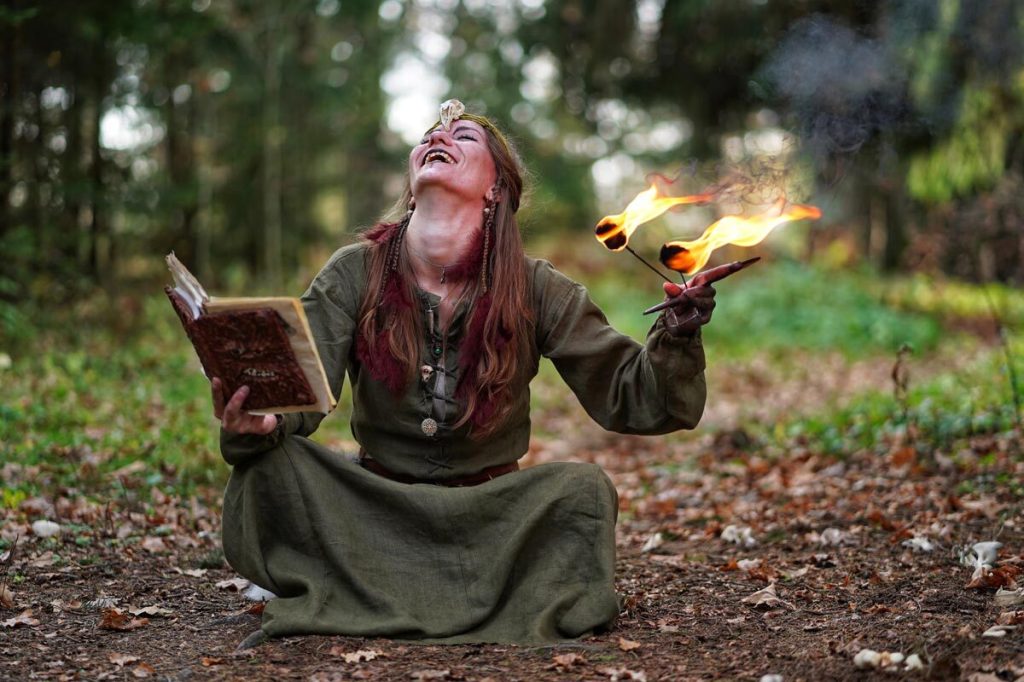
LARPing, which stands for Live Action Role-Playing, is a hobby where participants act out a role in a fictional setting, either by creating their own character or by playing a provided one.
It involves costumes, props, and often structured gameplay with storylines, quests, and sometimes combat using foam or other safe weapons. LARPs can be small, casual gatherings or large, organized events with detailed rules and immersive environments.
Key Elements of LARP
- Role-Playing: Players embody their characters, making decisions and interacting with others from their character’s perspective within the game’s story.
- Costumes and Props: Participants often wear costumes to become their characters and use props, such as swords, spells, or tools, to enhance the experience.
- Storylines and Quests: Events are guided by overarching narratives, quests, and character goals, providing structure and direction for the players.
- Game Systems: Rules define how skills work, how conflicts are resolved, and how characters progress in the game.
- Immersive Environments: Organizers create detailed fictional worlds with scenery, themed spaces, and sometimes even in-game economies to enhance immersion.

How it Works
- Character Creation: Players create or are assigned a character with a background, motivations, personality, and goals.
- Event Setup: Organizers, known as Game Masters or GMs, plan the story and setting, creating a detailed fictional world.
- Gameplay: Players, dressed as their characters, interact with each other and the environment, following the game’s rules and objectives.
- Conflict and Resolution: Conflicts can arise from character personalities or game mechanics, and are resolved through the game’s systems.
- In-Character vs. Out-of-Character: Players are expected to stay “in-character” during the event, and have clear indicators to transition “out-of-character” for game mechanics or questions.
Different styles of LARP
LARP is a broad hobby with many variations.
- Fantasy LARPs: Inspired by medieval and mythological elements, these often involve quests, magic, and mythical creatures.
- Horror LARPs: Designed to build suspense and fear, these games can include psychological or supernatural elements like zombies or vampires.
- Sci-fi LARPs: These games take place in futuristic worlds with advanced technology, such as dystopian societies or space opera settings.
- Nordic LARP: This style prioritizes collaborative storytelling and emotional immersion over competition. Rules are minimal, and the focus is on exploring human experiences.
- Combat vs. parlor games: Some LARPs focus heavily on physical combat with foam weapons, while others, known as “parlor LARPs,” are more socially-driven and may resolve conflicts through discussion or abstract means.
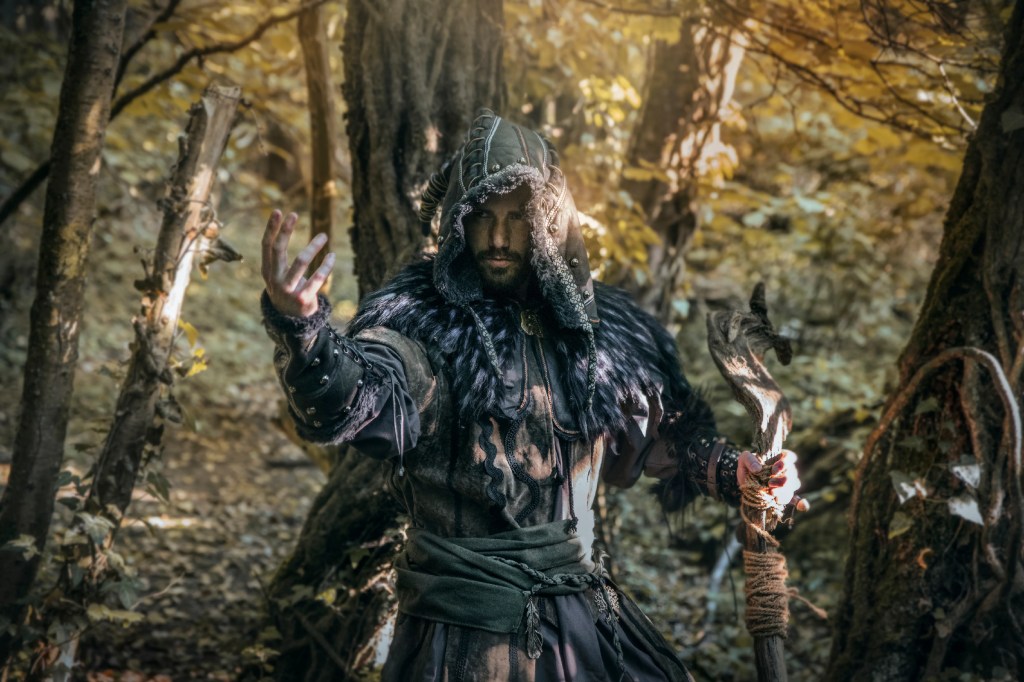
Benefits of LARPing
- Social: LARP fosters strong communities and friendships among players who share a creative interest.
- Creative: Participants enhance their creativity, improvisation, and storytelling abilities.
- Physical and mental: The activity offers a unique form of physical exercise and helps develop problem-solving and critical thinking skills as players navigate the story and challenges.
- Personal growth: By stepping into another person’s shoes, players can explore different perspectives and build self-confidence.
The world’s largest LARP events include ConQuest of Mythodea in Germany, which has hosted up to 10,000 participants, and Drachenfest, another large-scale event with tens of thousands of participants.
In North America, the LARP Bicolline in Quebec is a significant event, drawing thousands of players for its seven-day festival. These large events feature extensive role-playing, elaborate settings, and large numbers of participants and non-player characters.
Major LARP Events by Region
- Europe:
- ConQuest of Mythodea (Germany): Consistently ranked as one of the world’s largest LARP events, it features elaborate fantasy warfare, vibrant festivals, and complex role-playing across numerous factions.
- Drachenfest (Germany): Another major German event, Drachenfest attracts a large number of participants for its large-scale fantasy experience.
- College of Wizardry (Poland): This unique LARP takes place in a real castle and offers an immersive experience in a magical academy setting, focusing on narrative and social interaction.
- North America:
- Bicolline (Canada): Located in Quebec, Bicolline hosts a week-long festival that is considered the largest event of its kind in North America. It has strict rules regarding medieval attire and immersion.
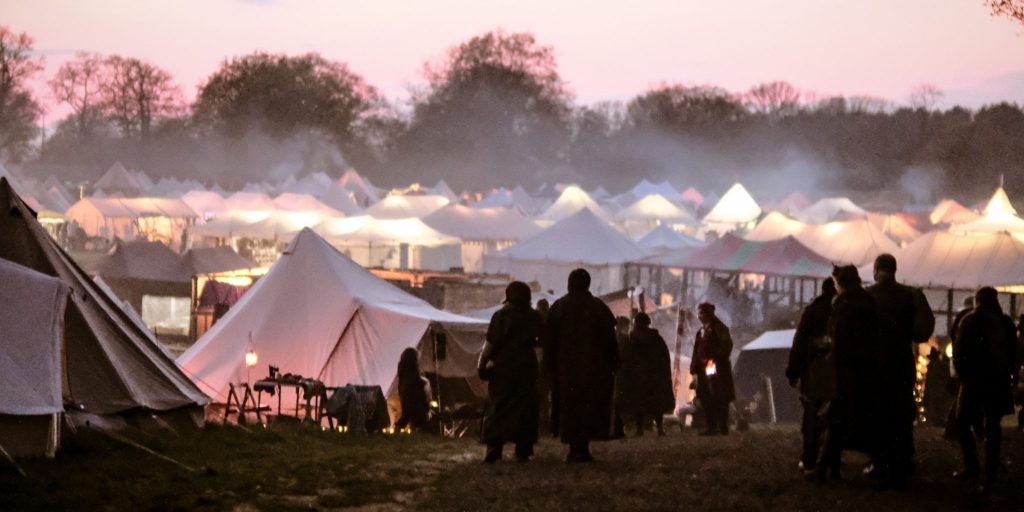
What Makes a LARP “Large”?
Large LARP events are defined by a combination of factors:
- Participant Numbers: A high number of players and non-player characters (NPCs) are a primary indicator of a LARP’s scale.
- Scope and Immersion: These events often feature sprawling settings, complex storylines, and meticulous attention to creating a believable world for participants.
- Duration and Complexity: Large-scale events are often extended, with participants engaging in immersive gameplay over several days, sometimes as long as a week.
- Festival Atmosphere: Many large LARPs blend epic role-playing with a vibrant festival atmosphere, complete with artists, traders, and diverse entertainment.

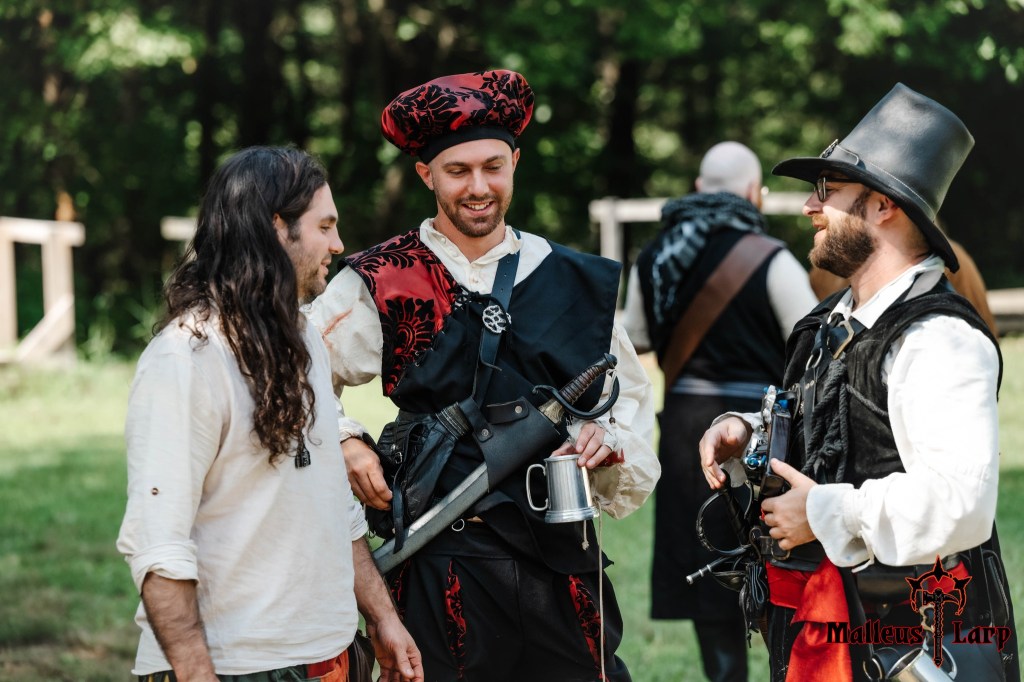
Malleus is an application-only, grim-dark fantasy Live Action Roleplaying (LARP) game set in a gritty version of the 16th century. It is inspired by games like Warhammer Fantasy and Darkest Dungeon, with a focus on immersive play, intense roleplaying, and theatrical combat.
Setting and gameplay
- The world: The game takes place in a fantasy world reminiscent of Central Europe during the Renaissance. Players are mercenaries and exiles who journey into the cursed Drakenwald forest to find and plunder “Witchstone,” a dangerous and valuable resource.
- Grim and perilous: The game is known for its grim tone, and players are expected to portray morally ambiguous characters who operate in this dark setting.
- Mechanics: Malleus features “rules-light” mechanics with an emphasis on roleplaying and thrilling theatrical combat. The game encourages collaboration within mercenary bands but also fosters internal competition.
- Immersion: Malleus places a heavy emphasis on immersion through high-quality costuming, props, and decor. It also features a “play-to-lift” environment, which means players are encouraged to help advance the stories and roleplaying of others.
- Wet LARP: Malleus is a “wet LARP,” meaning alcohol is permitted during the game. This contributes to its grim and perilous tavern-style setting.
Participation requirements
- Application-based: Malleus is an application-only game. Prospective players must submit an application that includes details about their LARP experience, character concept, and costume plan. Applications are reviewed quarterly.
- Location and events: The game is run by the LARP Co-op and holds quarterly events in central Pennsylvania. Players can join specific factions, with some bunks reserved for certain groups.

A LARP (live-action role-playing) creator, also known as a game master, designer, or event organizer, has broad responsibilities ranging from creative world-building to practical event management. The exact duties depend on the scale and style of the LARP, but generally include development, logistics, and facilitation.
Creative and game design responsibilities
- Create the game world. Develop the history, lore, setting, and factions that define the world players will inhabit.
- Establish game rules and mechanics. Formalize the rules that govern all gameplay, including combat, magic, skills, and how player actions affect the game world. For longer games, provide guidelines so participants can create their own characters within the system.
- Write the plot and scenarios. Craft the overarching storyline, including the main plot, subplots, and individual character plots. This requires balancing narrative control with player agency, as players’ decisions will inevitably alter the story.
- Design player characters. For smaller or one-shot LARPs, creators often write detailed character sheets with backstories, goals, and motivations to give to players. For longer campaigns, creators may design archetypes and systems for players to customize their own characters.
- Incorporate player feedback. Review post-event letters (PELs) or surveys to assess if plot objectives were met and to gather feedback on what did and didn’t work for participants.
Logistical and event management responsibilities
- Manage finances. This includes setting and collecting ticket fees, managing event budgets, and potentially developing fundraising strategies.
- Secure a venue and manage site logistics. Find and book an appropriate location for the game. Responsibilities can include managing catering, props, and ensuring proper hygiene and accommodations are available.
- Handle legal and safety compliance. Ensure the event is run in compliance with all relevant laws and safety regulations. This includes acquiring liability insurance and having clear safety protocols, especially for combat and other physical activities.
- Recruit and train staff. Build a team of committed individuals to assist with running the event. This includes non-player characters (NPCs) to advance the plot, referees to manage rules disputes, and safety officers.
- Manage advertising and outreach. Market the LARP to attract players and get the word out about the event using social media, websites, and conventions.
Facilitation and on-site responsibilities
- Act as a referee. During the game, serve as the arbiter of the rules, answer player questions, and resolve rules disputes. This requires deep knowledge of the game system.
- Oversee the plot. Manage the overall narrative and control the actions of non-player characters (NPCs). They must be prepared to improvise and adapt the story based on unpredictable player actions and decisions.
- Ensure player safety and satisfaction. Monitor player behavior and the game environment to foster an engaging experience for everyone. This can involve moderating player conflicts and creating an overall positive atmosphere.
- Manage NPCs. Directly control or guide the non-player characters who interact with and challenge the players.

A Live Action Roleplaying (LARP) prop master is responsible for acquiring, creating, and managing all of the movable items used during a LARP event.
This role is vital to creating an immersive and authentic atmosphere for players.
The responsibilities are similar to a film or stage prop master but adapted for the unique, and often demanding, requirements of live-action play.
Core responsibilities
A LARP prop master’s duties range from pre-production planning to on-site management and post-event cleanup.
Planning and pre-production:
- Create a prop list: Read the game’s plot or scenario and, in consultation with the game designers, compile a master list of every prop needed.
- Research: Ensure historical or fantastical accuracy for props, whether they are weapons, tools, or items of decor. For fantasy settings, this involves designing items that align with the game’s lore.
- Budgeting: Manage the prop budget and decide whether to buy, rent, or build each item.
Acquisition and manufacturing:
- Sourcing: Find and acquire props through purchase, rental, or borrowing. This may involve shopping at craft stores, visiting historical or theatrical supply houses, or searching for unique finds online.
- Construction: Build custom props that cannot be sourced or bought. This can involve a wide variety of skills, including carpentry, sculpting, sewing, and painting. For safety, LARP-specific techniques for weapons and boffers are often used.
- Technology integration: Create special effects or “magic” items using simple electronics, light, and sound, similar to the “Power Props” system from the MIT Media Lab.
Event management:
- Continuity: Work closely with the game runners to ensure that items and plot developments remain consistent throughout the event.
- Setup and reset: Manage the placement of all props on the set before each game session. This includes setting up special areas like a merchant’s stall, an alchemy lab, or a magical ritual site.
- Backup and repair: Have backup props for items that may break during play. You are also responsible for making on-the-fly repairs during the event.
- Organization: Maintain a detailed system for tracking and organizing all props and ensure they are returned to storage at the end of each session.
Safety and durability:
- Safety standards: Design and manufacture props to be safe for players to use, especially for combat and weapon props. This involves using approved materials and construction methods to minimize injury.
- Functionality: Ensure that interactive or mechanical props function as intended and can withstand repeated use and handling during the event.
Essential skills
A successful LARP prop master needs a combination of practical skills, artistic vision, and organizational ability.
- Craftsmanship: Experience with various materials and tools for building and modifying props.
- Creativity and research: The ability to visualize and create props that fit the game’s setting and style, often requiring extensive research.
- Organization: Strong tracking and inventory management skills to keep all props, materials, and supplies in order.
- Problem-solving: The flexibility to adapt and find creative solutions when faced with unexpected challenges during a live game.
- Collaboration: Excellent communication skills to work effectively with game designers, set decorators, and other staff.
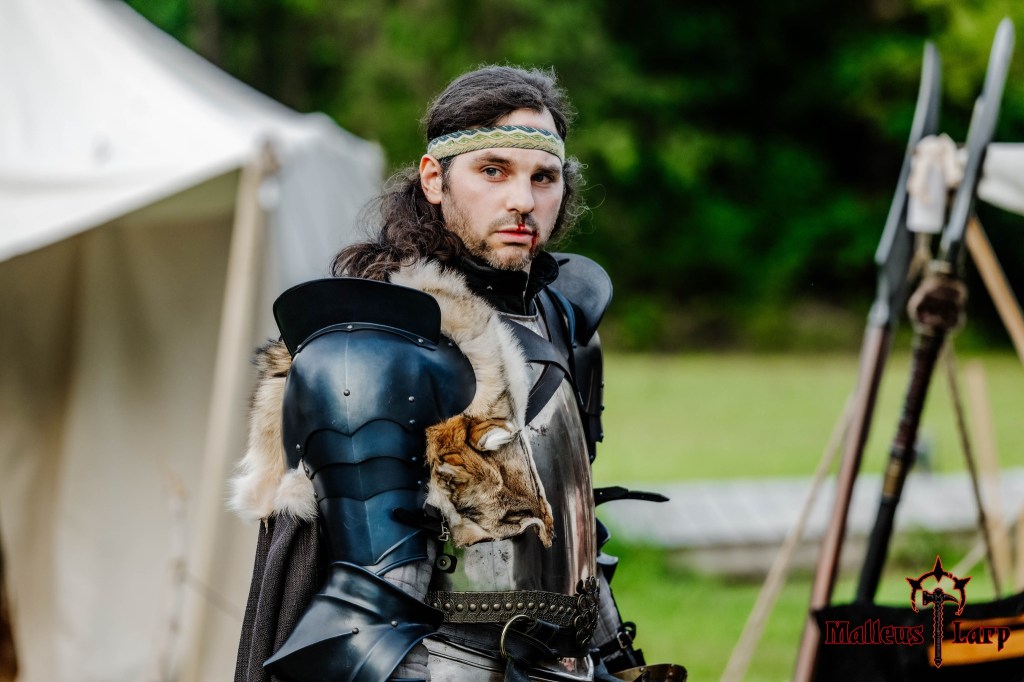
While LARP is a collaborative form of storytelling among all participants, the storyteller is the primary architect who provides the foundation for players to build upon. The overall quality and immersive experience of a LARP are heavily dependent on the quality of its storytelling.
How a good storyteller improves a LARP
- Creates a vibrant, immersive world: The storyteller writes the setting, backstory, and long-term plots that make the game world feel rich and believable. They define the world’s factions, cultures, and lore, giving players a foundation to build their characters and relationships.
- Encourages player agency: A skilled storyteller provides opportunities for player characters to make meaningful choices that affect the world and the ongoing narrative. They avoid “NPC-theater,” where players are simply spectators, and instead empower players to drive the action and resolve plots themselves.
- Responds to player actions: Because LARP is an improvisational art form, the plot rarely goes exactly as planned. A good storyteller adapts to player choices, incorporating them into the larger narrative to make players feel like active participants rather than observers.
- Fosters engaging interactions: By writing compelling plots and intriguing non-player characters (NPCs), storytellers facilitate memorable interactions between players. They can intentionally set up conflict and alliances to foster collaboration and role-playing.
- Manages game mechanics and pacing: Storytellers are often in charge of managing the rules, props, and logistics that keep the game running smoothly. This can include writing stat cards, managing NPCs, and creating mini-games to entertain players who aren’t currently engaged in a main storyline.
The consequences of a bad storyteller
A poor storyteller can undermine the entire LARP experience by creating a frustrating or boring environment for players.
- Player frustration and disengagement: Storytellers who ignore player agency or railroad them toward a specific outcome can make players feel like their choices don’t matter, leading to disinterest.
- Confusing and inconsistent world: A storyteller who is disorganized or uncommunicative can create inconsistencies in the game world. This could include contradicting plot details, disorganized rules, or having different staff members run a game differently.
- Stale or unfair game: A storyteller who fails to provide plot updates or new events can cause the game to grow boring and repetitive over time. If they show favoritism or use their position to unfairly punish players, it can lead to a toxic and unhealthy game community.
- NPC-driven plots: If the story relies too heavily on NPCs for major plot points, players may feel sidelined or unimportant to the narrative. The ideal is to involve player characters directly in the execution of the plot.
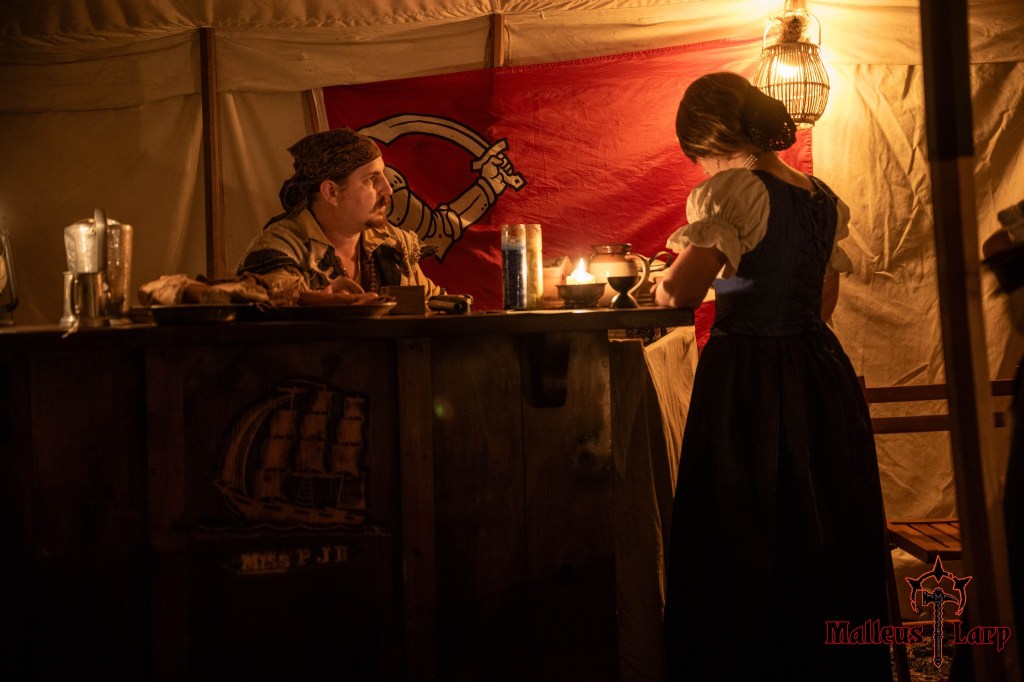
A coven of witches might benefit from participating in a Live Action Role-Playing (LARP) game in numerous ways, from enhancing their spiritual practices and developing group dynamics to building confidence and fostering a stronger community bond.
The line between intentional role-play and ceremonial ritual can be blurred, allowing for a creative and supportive space to explore themes central to witchcraft.
For group cohesion and communication
- Enhances teamwork: Working together to solve in-game problems, create compelling narratives, and overcome challenges within a LARP can strengthen a coven’s collaborative skills.
- Develops leadership skills: The low-stakes environment of a LARP allows coven members to practice and build confidence in their leadership abilities and decision-making without real-life consequences.
- Encourages empathetic communication: By stepping into the mindset of their LARP characters, participants can gain a deeper understanding of differing perspectives. This can promote empathetic communication and a more supportive attitude toward one another, both in and out of the game.
- Allows for safe conflict resolution: A LARP can feature in-game conflicts and mediation. This provides a safe, low-stakes setting to practice navigating difficult interpersonal issues and reaching compromises, which can be valuable for resolving real-world conflicts within the coven.
- Provides creative outlets for ritual: Many LARPers enjoy crafting props, costumes, and in-game artifacts. This shared creative endeavor can foster a sense of accomplishment and serve as a constructive form of group bonding.
For magical and spiritual practice
- Expands ritual performance skills: LARP involves engaging in improvised or scripted actions within a fictional narrative. For a coven, this can act as a practice ground for conducting meaningful rituals and ceremonies by building skills in emotional expression, improvisation, and storytelling.
- Offers a symbolic magical space: A LARP setting can serve as a canvas for a coven’s magical practice. Mundane objects can take on new meaning within the game’s context, allowing the coven to explore magical theory and symbolism in an artistic and immersive way.
- Provides spiritual insights: Playing characters with different belief systems can help coven members gain new perspectives and reflect on their own spiritual paths. The game’s heightened reality can make prayers and rituals feel especially potent and real, even if performed in an “out of game” context.
- Builds confidence in magical abilities: Embodying a powerful, magical character in a LARP can be a way for a witch to explore different facets of their craft in a structured, supported environment. The success of their in-game actions can translate into increased self-efficacy and confidence in their real-world practices.
- Encourages exploration of archetypes: Many magical traditions use archetypes, and LARP is an excellent vehicle for exploring these figures firsthand. A coven can collaboratively develop characters that embody different archetypes, deepening their understanding of these concepts.
For personal and creative growth
- Fosters creativity and storytelling: LARP is a collaborative form of storytelling. By participating, a coven can collectively create engaging narratives, develop complex characters, and craft the compelling drama that defines an effective ritual.
- Boosts self-confidence: Stepping into an alter ego and performing a role can be a powerful way to build self-confidence. A LARP offers a safe space to experiment with different personas and push personal boundaries.
- Reflects on real-world issues: Many LARPs, including those focusing on witchcraft themes, address larger systemic issues. A coven can use the LARP to explore complex societal problems and reflect on their values in a fictionalized context.
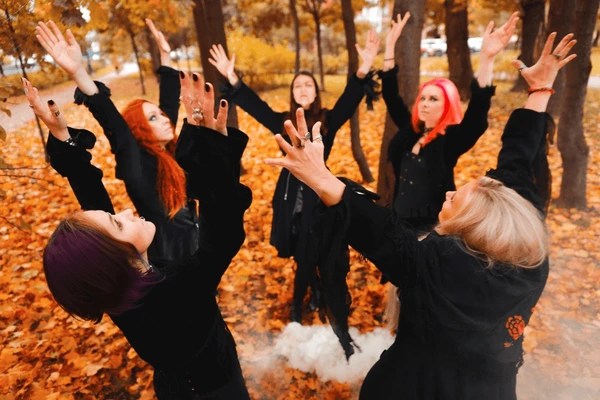
 The Grove Coven