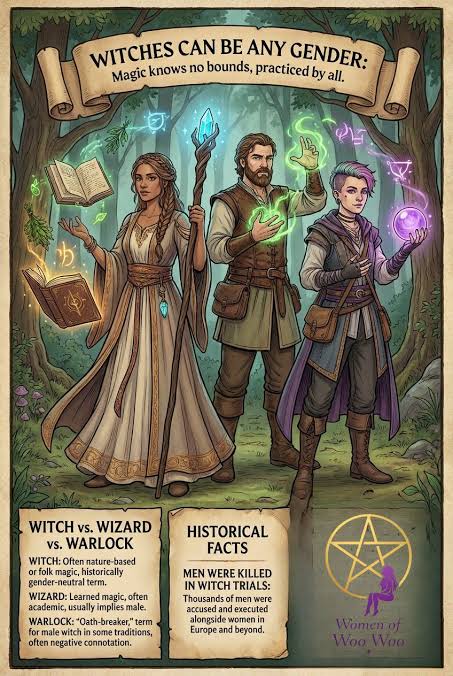
“Sacred Gender” in the context of covens and witchcraft refers to a spiritual and inclusive understanding of gender, particularly for trans, nonbinary, and gender-expansive individuals. It emphasizes honoring and embracing all expressions of gender, moving beyond the traditional binary. This understanding is increasingly integrated into many modern covens and witchcraft practices, as well as some traditions like Wicca, which are now more inclusive of LGBTQ+ individuals.
Here’s a more detailed explanation:
- Shifting Perspectives: Traditional witchcraft sometimes included gender essentialism or a focus on the binary, but many modern covens and groups are moving towards a more fluid understanding of gender.
- Inclusive Rituals: Some trans, nonbinary, and gender-expansive individuals are establishing and leading their own covens, creating rituals that celebrate and affirm their identities and transition milestones.
- Internal Exploration: Concepts like “Sacred Gender” encourage individuals to explore their own gender identity and how it relates to their spiritual practice, potentially leading to self-actualization and a deeper connection to the self.
- Challenging Gender Norms: Some covens and traditions challenge gender norms within their practices, recognizing that anyone can embody masculine, feminine, or neither energy.
- Finding Power in Vulnerability: For transgender individuals, embracing their gender identity in a spiritual context can be empowering, offering a space to feel seen and affirmed, and allowing them to explore new expressions of self.
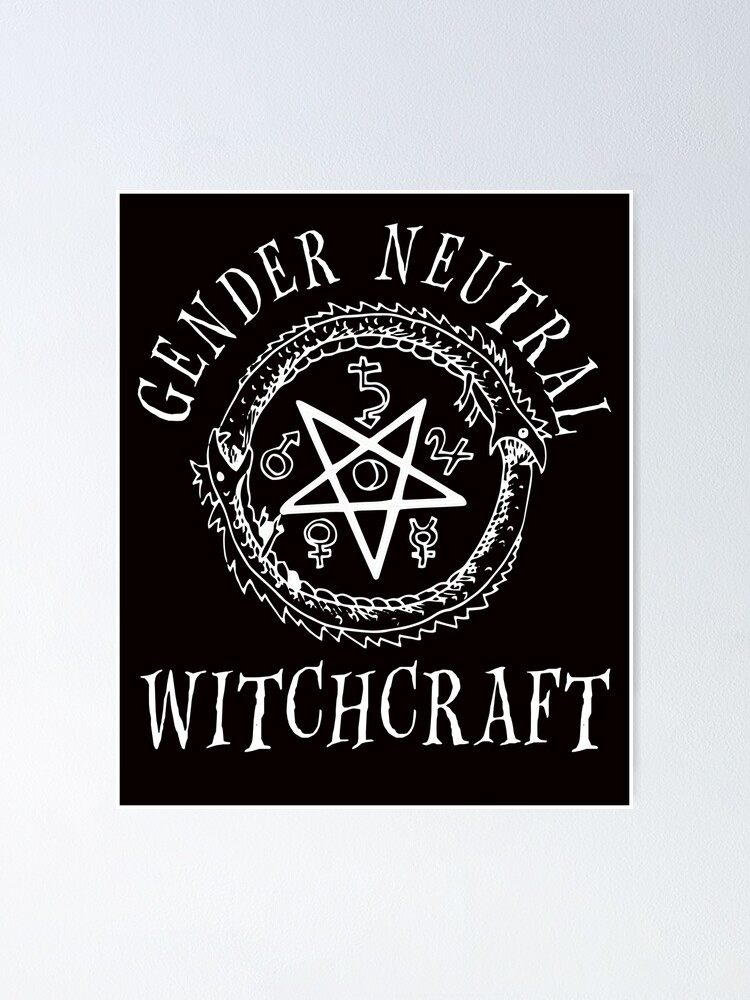
Gender-neutral Witchcraft refers to the historical reality that the word “witch” is inherently gender-neutral, alongside modern movements that decenter the strict gender binaries traditionally found in mid-20th-century Neo-Paganism.
Historically, the etymology of the word traces back to Old English, where wicca referred to a male practitioner and wicce to a female practitioner, eventually merging into the singular, all-encompassing term “witch”.
Today, gender-neutral witchcraft manifests in both linguistic reclamation and evolving spiritual practices that accommodate non-binary, trans, and gender-expansive practitioners.
1. Linguistic De-gendering
A common cultural misconception—frequently popularized by modern fantasy fiction—is that a “witch” must be a woman, while men are “wizards” or “warlocks”. In actual occult and historical contexts, anyone of any gender identity who practices magic is simply a witch.
- Warlock: Historically, this term derives from the Old English wærloga, meaning “oath-breaker” or “traitor”. Because of its negative connotations of betrayal, most modern practitioners do not use it as a standard male equivalent to a witch.
- Wix / Wixen: In certain digital subcultures and fandom communities, terms like “wix” or “wixen” have been crowdsourced to create a completely modern, explicitly non-gendered alternative to the perceived witch/wizard binary.
2. Moving Past the Polarized Binary
Many foundational mid-century witchcraft traditions (such as traditional Wicca) are built entirely around a strict gender polarity—revolving around the literal or symbolic pairing of a High Priestess and a High Priest, or the divine balance of a Great Mother Goddess and a Horned God.
Modern gender-neutral and queer-inclusive witchcraft actively reshapes these frameworks:
- De-centering Polarity: Practitioners increasingly view the Divine not as a rigid male/female binary, but as an expansive spectrum, drawing from gender-fluid deities, animistic spirits, or universal energy that transcends human gender categories.
- Neutral Leadership Roles: Many contemporary covens are abandoning gender-essentialist hierarchy. Rather than requiring a binary pairing to lead rituals, modern circles use gender-neutral titles or focus leadership entirely on experience, magical capability, and community service rather than anatomy or identity.
- Magic as Self-Exploration: For many non-binary and trans individuals, the practice of eclectic witchcraft is inherently tied to autonomy. Because magic relies on internal power, intention, and breaking societal molds, it serves as an ideal framework for exploring and validating an identity outside conventional social norms.
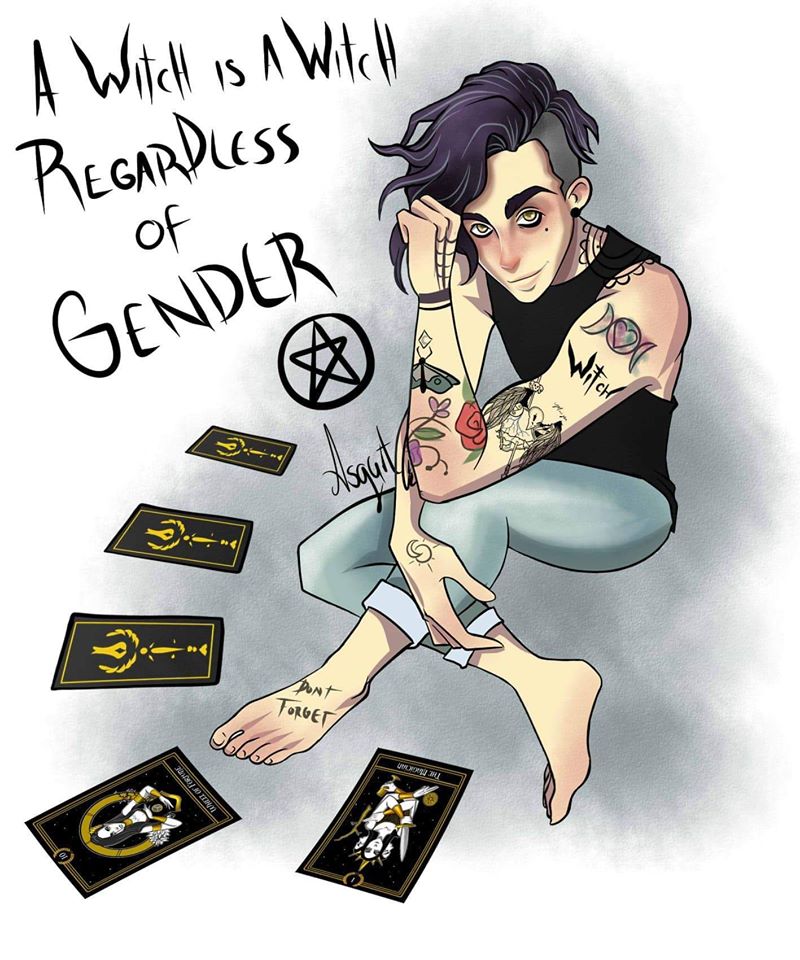
The Grove Coven fosters an explicitly gender-neutral and LGBTQ+ inclusive space in Los Angeles by dismantling the rigid gender binaries traditional to mid-century Wicca and rebuilding a practice centered on accessibility, intersectionality, and shared leadership.
While historical traditions like Gardnerian or Alexandrian Wicca rely heavily on the strict polarity of a High Priestess and High Priest to balance energy and work magic, the Grove Coven treats spiritual power as a universal energy that entirely transcends human anatomy or identity.
Here is how the coven intentionally structures its community, rituals, and framework to ensure every practitioner—regardless of gender identity, expression, or background—is fully seen, respected, and empowered:
1. Decentralizing the Binary and Reimagining Leadership
Rather than enforcing a dualistic structure where ritual roles are strictly tied to a male/female axis, the Grove Coven shifts the focus of its leadership entirely to magical capability, experience, and community service.
- Fluid Roles: Leadership within circles and workshops is not dependent on biological sex or rigid gender performance.
- Inclusive Title Systems: By moving away from hierarchical demands for paired binary leaders, the coven opens the floor for non-binary, trans, and queer practitioners to step into roles of spiritual authority naturally.
2. Accessible, Lay-Led Education and Mutual Aid
The community grew organically from a post-pandemic book club meeting in Pan Pacific Park, where foundational texts like Raymond Buckland’s Complete Book of Witchcraft were studied collectively for a year and a day. Because it began as a grassroots, collaborative study group, it naturally developed a highly democratic, protective, and horizontal culture.
- Disrupting the Status Quo: Traditional esoteric groups often employ strict gatekeeping, high financial barriers, or rigid initiatory lineages that can be inherently exclusionary to marginalized individuals.
- Mutual Aid Framework: The Grove Coven operates on a donation-based, mutual-aid framework. This model removes economic barriers to spiritual education, ensuring that low-income, unhoused, or systemically marginalized LGBTQ+ individuals in Los Angeles have equal access to spiritual tools and mentorship.
3. Creating a Safe, Visible Cultural Hub in Hollywood
The growth of the network culminated in the launch of an esoteric storefront and community hub, the Moonlight Store and Academy in Hollywood.
- Visibility as a Shield: Positioned deliberately in the heart of Hollywood—right where the annual LA Pride Parade launches—the physical space serves as a literal beacon of safety and public visibility for queer mystics.
- The Saturday Practitioner Showcase: Every Saturday at 5:55 PM, the academy hosts a lay-led showcase. This event acts as a collaborative, ongoing forum where local solitary witches, coven elders, and seekers of all gender expressions can share their personal grimoires, diverse cultural practices, and occult talents without judgment. It builds a living phone tree and a tight-knit safety net for the local community.
4. Embracing Queer Deities and Eclectic Magic
Because the coven embraces an eclectic approach to modern witchcraft, practitioners are encouraged to connect with the Divine in ways that feel authentic to their lived experiences. This includes honoring gender-fluid, non-binary, and queer figures from global mythologies, as well as focusing on animistic practices that view the living world through the lens of spirit rather than human gender roles. Magic is treated as a profound tool for autonomy, self-actualization, and trauma healing—perfectly aligning with the journey of self-exploration central to many LGBTQ+ lives.