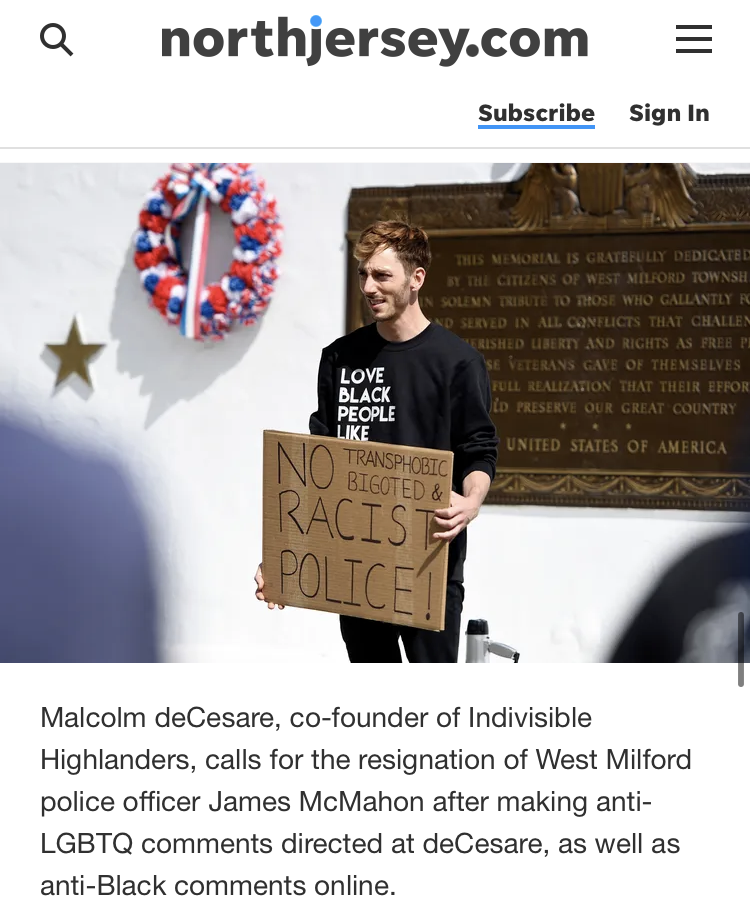
A journalist would want to follow up on how the West Milford Police Department (WMPD) handled the case of Officer James “Jim” McMahon because it sits at a highly contentious intersection of public accountability, systemic bias, and officer mental health protections.
The case spans several years of public scrutiny and presents two sharply competing narratives that make it a compelling investigative story:
1. The Public Accountability and Bias Narrative
In June 2020, McMahon was placed on administrative leave after local groups—including the Indivisible Highlanders—exposed highly offensive, anti-Black, and anti-LGBTQ comments he made online.
The “Free Pass” vs. Accountability Angle:
Members of the community launched petitions and staged protests demanding his immediate termination, questioning how an officer harboring documented prejudices could fairly protect and serve all residents.
Journalistic Follow-Up:
A reporter would want to investigate how the department originally resolved these bias complaints.
Public records show McMahon remained listed as an active officer long after the 2020 scandal.
Journalists would want to uncover whether the WMPD’s internal affairs investigation actually held him accountable or quietly swept the incident under the rug.
2. The Legal Retaliation and PTSD Narrative
By August 2026, the case took a dramatic turn when the township officially moved to terminate McMahon, sparking intense disciplinary hearings.
The Mental Health vs. Fitness-for-Duty Clash:
McMahon and his legal team allege that the department is actively punishing and retaliating against him simply because he sought treatment for Post-Traumatic Stress Disorder (PTSD) related to his military combat veteran background.
While his own doctors cleared him to return to work, the township used an internal fitness-for-duty exam to declare him unfit and initiate his firing.
Testing State Law:
New Jersey recently passed specific legislation championed by lawmakers to protect first responders from retaliation when seeking help for diagnosed PTSD.
Journalistic Follow-Up:
Investigative reporters, such as Sarah Wallace at NBC New York, have tracked this case to see if West Milford is actively violating state law.
A journalist would want to dig into the conflicting medical evaluations to determine if the town’s push for termination is a legitimate safety measure or a pretextual move to get rid of a liability.
Ultimately, the case is a perfect microcosm of modern police reform debates, highlighting the friction between a community demanding a cop be fired for bias and a department dealing with the complex legalities of officer mental health.
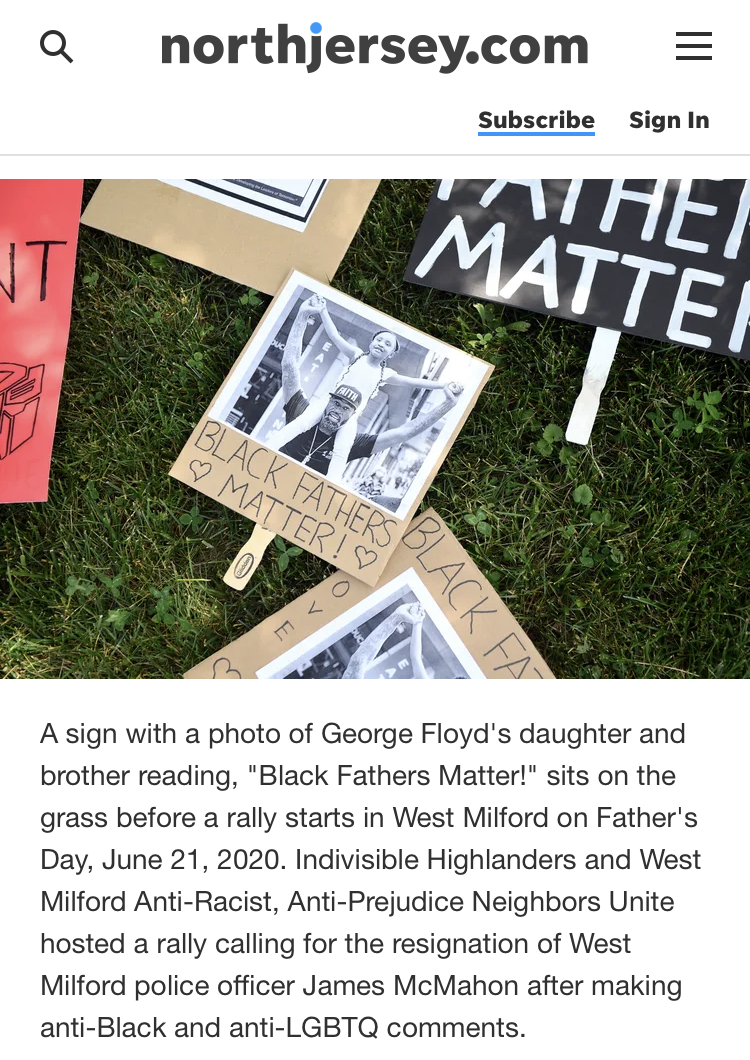
The DeCesare family’s friction with the West Milford Police Department (WMPD) stems from their role as prominent whistleblowers and local activists.
In 2020, Malcolm deCesare and Charles deCesare publicly exposed deeply controversial, racist, and anti-LGBTQ+ remarks made online by a sitting WMPD officer, triggering town-wide protests and a Passaic County Prosecutor’s Office investigation.
When community members raise concerns about systemic retaliation, intimidation, or institutional cover-ups in close-knit municipal environments like West Milford, it usually points to several institutional and political dynamics:
Protecting the Department from Civil Liability:
When local activists expose misconduct, it opens the township up to massive civil rights lawsuits, costly internal affairs investigations, and independent oversight from the county prosecutor.
Law enforcement leadership or the municipal administration may feel institutional pressure to sweep controversies under the rug to shield the town from legal and financial damages.
Defending “Blue Wall” Dynamics:
In traditional, tightly knit law enforcement agencies, an unspoken “blue wall of silence” can exist.
When outside families actively campaign for the termination of a veteran officer, the department’s internal culture may view those citizens as hostile adversaries rather than residents to protect.
This dynamic can manifest as retaliatory behavior, excessive surveillance, or targeted code enforcement to deter the family from continuing their advocacy.
Insulating the Local Political Establishment:
In a township with a strong partisan makeup, the police union and local government administration are often politically aligned.
Activism by the DeCesare family—especially when partnered with groups like the Indivisible Highlanders—directly challenges the conservative political establishment.
Officials may seek to minimize or suppress these disputes to prevent progressive movements from gaining electoral leverage.
Controlling the Narrative and Public Trust:
Public exposures of bigotry or internal corruption damage the police department’s local standing.
Cover-up attempts are often defensive maneuvers designed to stall transparency, drag out investigations, and outlast the news cycle until public outrage fades.

