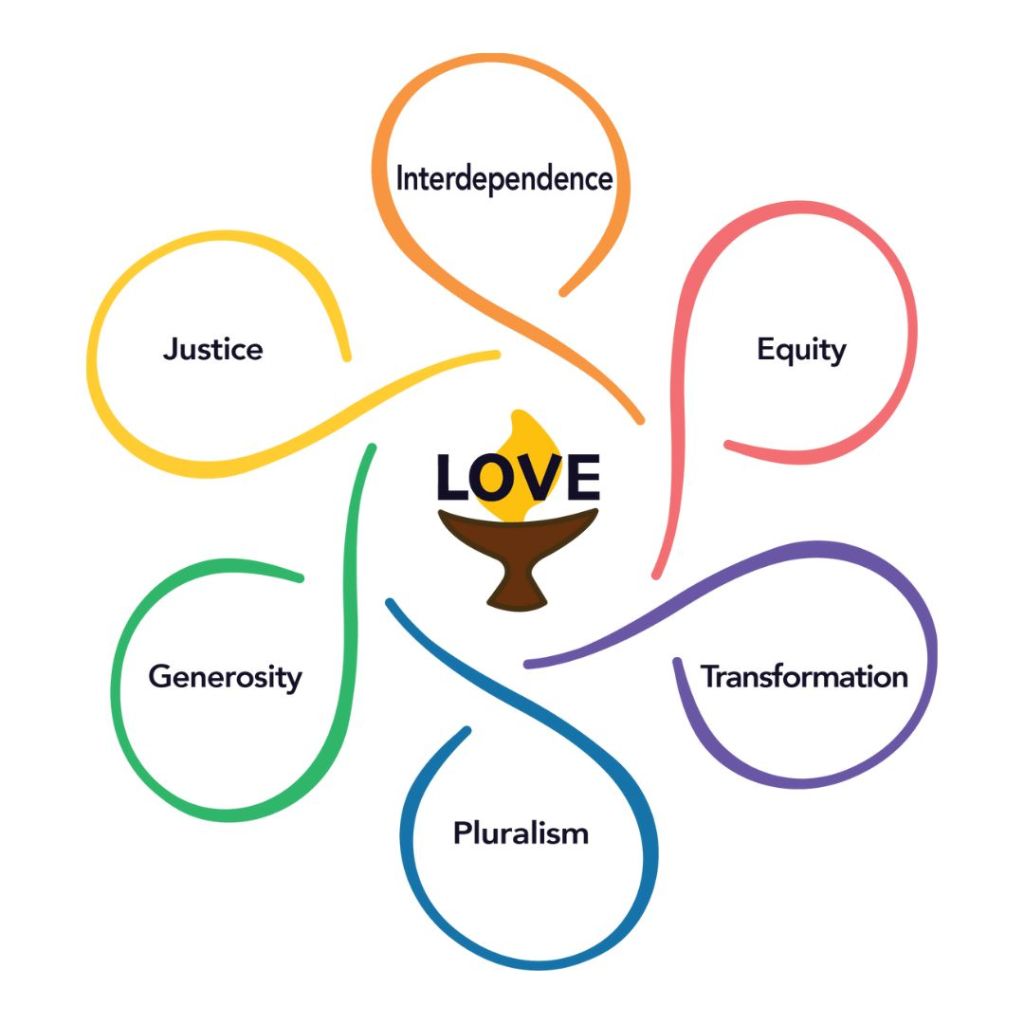
Unitarian Universalism (UU) serves as a unique intersection of spiritual freedom, democratic defense, and human rights advocacy in America today.
Because UU communities do not require adherence to a rigid creed, they act as pluralistic hubs where diverse theological paths—including Earth-centered traditions and LGBTQ+-affirming spiritualities—coexist and organize collectively.
Why UU is Vital for the LGBTQ+ Community
Institutional and Theological Affirmation:
Unlike faith traditions that merely tolerate LGBTQ+ individuals, Unitarian Universalism explicitly affirms and promotes LGBTQ+ identity as an inherent part of its First Principle (the inherent worth and dignity of every person).
Through programs like the UUA Welcoming Congregation Program, UU churches undergo systematic training to ensure their practices, language, and leadership are fully inclusive.
A Sanctuary of Holistic Acceptance:
For LGBTQ+ individuals who have experienced religious trauma from dogmatic backgrounds, UU churches offer a place to heal.
Members can explore spirituality without fear of judgment, original sin, or conditional acceptance.
Why UU is Vital for Pagans and Wiccans
Earth-Centered Spirituality is Formally Recognized:
In 1995, the Unitarian Universalist Association (UUA) officially added a sixth source to its living tradition: “Spiritual teachings of Earth-centered traditions which celebrate the sacred circle of life and instruct us to live in harmony with the rhythms of nature.”
This explicitly validates Pagan, Wiccan, and Animist worldviews.
The Covenant of Unitarian Universalist Pagans (CUUPS):
UU churches frequently host chapters of CUUPS, providing Pagan and Wiccan practitioners with physical spaces to openly celebrate Sabbats, practice rituals, and build community without having to remain in hiding.
Political Leverage, Democratic Values, and Government Protections
Unitarian Universalist churches provide essential institutional infrastructure that translates spiritual values into civic power:
Defense of Democratic Practices:
The Fifth Principle of UU is the right of conscience and the use of the democratic process within congregations and in society at large.
In a climate where democratic norms are challenged, UU churches mobilize voters, fight voter suppression, and actively teach civic engagement as a moral imperative.
Religious Freedom as Political Leverage:
When conservative political groups use “religious liberty” to justify discrimination or roll back civil rights, UU churches provide a vital counter-lever.
Because UU is a recognized religious denomination, its clergy and members can fight for LGBTQ+ protections, reproductive rights, and environmental justice on the grounds of their own religious freedom.
This disrupts the narrative that religious liberty belongs exclusively to traditionalist factions.
Infrastructure for Social Action:
UU churches are highly organized networks capable of rapidly deploying resources.
They often function as sanctuary spaces, host local advocacy groups, organize protest contingents (frequently visible by their “Side with Love” yellow banners), and lobby local and national governments to protect marginalized communities.
—
Unitarian Universalist (UU) churches provide a vital sanctuary and a powerful form of religious and political leverage in America today because they explicitly weaponize religious freedom to defend marginalized groups.
Unlike traditional religious institutions, UU communities operate without a binding creed, instead uniting around shared principles that emphasize the inherent worth of every person, democracy, and spiritual pluralism.
Here is why they are exactly what America—and specifically the LGBTQ+, Pagan, and Wiccan communities—needs right now.
1. A Sanctuary and Tool for the LGBTQ+ Community
Official, Uncompromising Inclusion:
UU churches have been officially welcoming and affirming LGBTQ+ individuals for decades, celebrating queer leadership and marriages long before federal protections existed.
The “Religious Freedom” Counterweight:
In a political landscape where conservative groups use “religious liberty” to justify discrimination, UU churches flip the script.
They use their status as an established religious institution to fight for LGBTQ+ rights, arguing that restricting healthcare, marriage, or self-expression violates the religious freedom of Unitarian Universalists who are spiritually called to affirm these rights.
2. A Legitimate Home for Pagans and Wiccans
The Covenant of Unitarian Universalist Pagans (CUUPS):
UU churches explicitly recognize and celebrate Earth-centered, Pagan, and Wiccan spiritualities.
CUUPS chapters exist within UU congregations, providing a safe, physical space to practice rituals, celebrate the Wheel of the Year, and build community.
Institutional Legitimacy:
Historically, Pagans and Wiccans have faced intense social stigma, job insecurity, and custody battles due to prejudice.
Belonging to a federally recognized, mainstream religious denomination provides a layer of institutional legitimacy and protection that shields individuals from discrimination.
3. Civic Muscle and Democratic Values
Democracy as a Spiritual Principle:
The Fifth Principle of Unitarian Universalism is “the right of conscience and the use of the democratic process.”
For UUs, voting, gerrymandering reform, and defending democratic norms are not just political tasks—they are religious duties.
Organizing Infrastructure:
UU churches function as active hubs for civic engagement.
They provide physical space for community organizing, voter registration drives, and social justice coalitions, offering a well-funded, structured counter-weight to the political machine of the religious right.
4. Navigating Shifting Government Protections
A Buffer Against State Overreach:
As federal and state-level protections for LGBTQ+ individuals and religious minorities fluctuate, UU churches offer a highly organized network of mutual aid, legal advocacy, and sanctuary.
Moral Authority in Court:
When fighting discriminatory laws, UU clergy provide powerful testimony.
They dismantle the narrative that “religious Americans” unanimously support restrictive policies, proving to lawmakers and courts that true religious freedom includes the freedom to affirm diversity.

